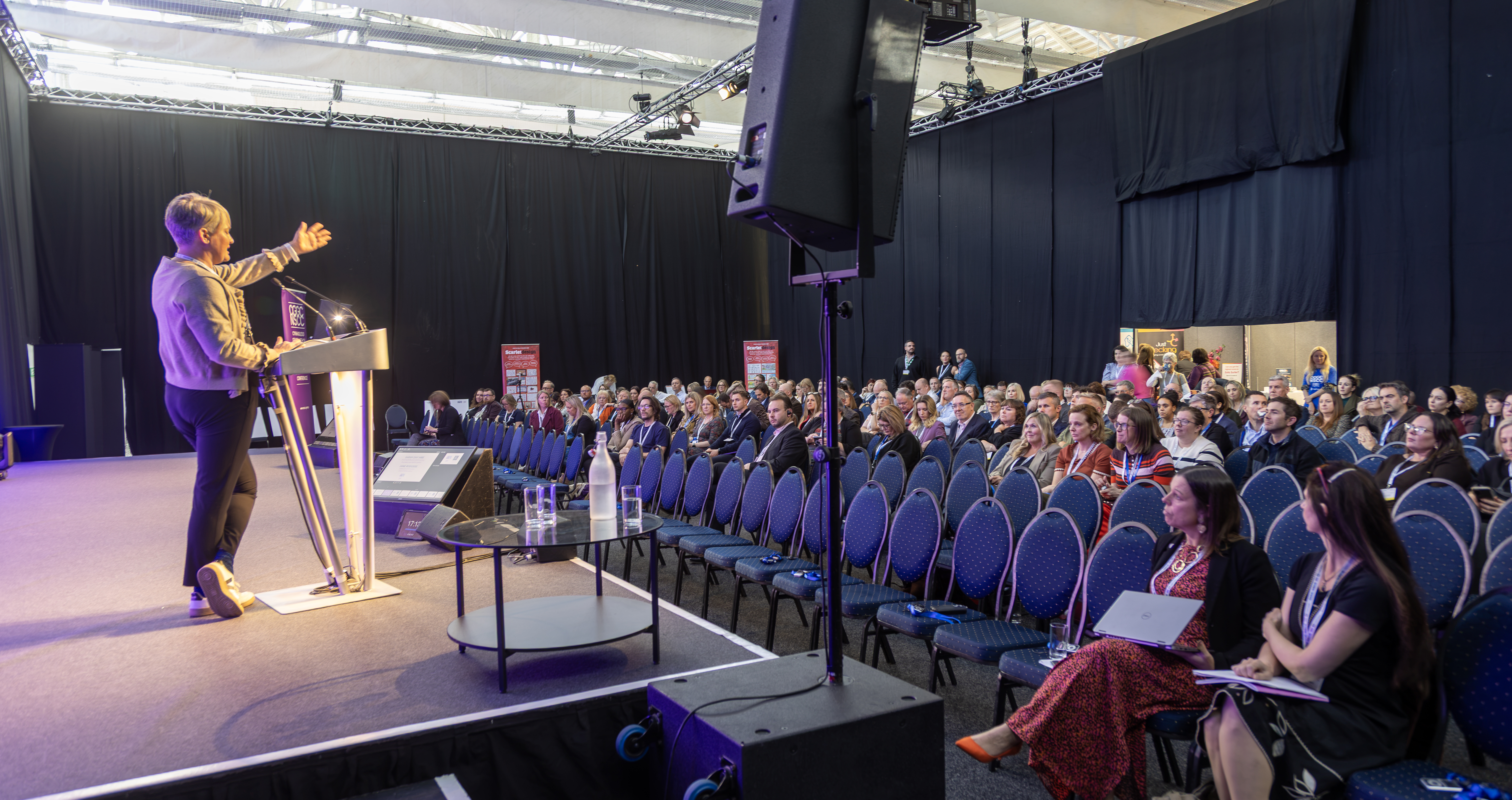
What happens when hundreds of people committed to better social care come together? Stronger connections, fresh ideas and perspectives, deepening trust, and celebrating vulnerability as a strength.
This was the experience of the National Social Care Conference 2026, which brought colleagues from across Wales and beyond together in Cardiff under the theme Times Like These: People, Pride and Purpose in Social Care.
Across two days, the programme explored some of the biggest questions facing social care: how we respond to growing complexity and demand; how we create a sustainable workforce; how prevention, digital innovation and collaboration can improve people’s lives; and, most importantly, how our shared humanity is the key to creating the social care system that our society needs and deserves. Indeed, what defined this year’s conference was not simply the breadth of the programme. It was its honesty.
Speakers and workshop leaders shared deeply personal experiences, often with remarkable courage. Those stories created genuine connection across the conference and opened up space not only to confront difficult realities, but to imagine what social care could look like in the future.
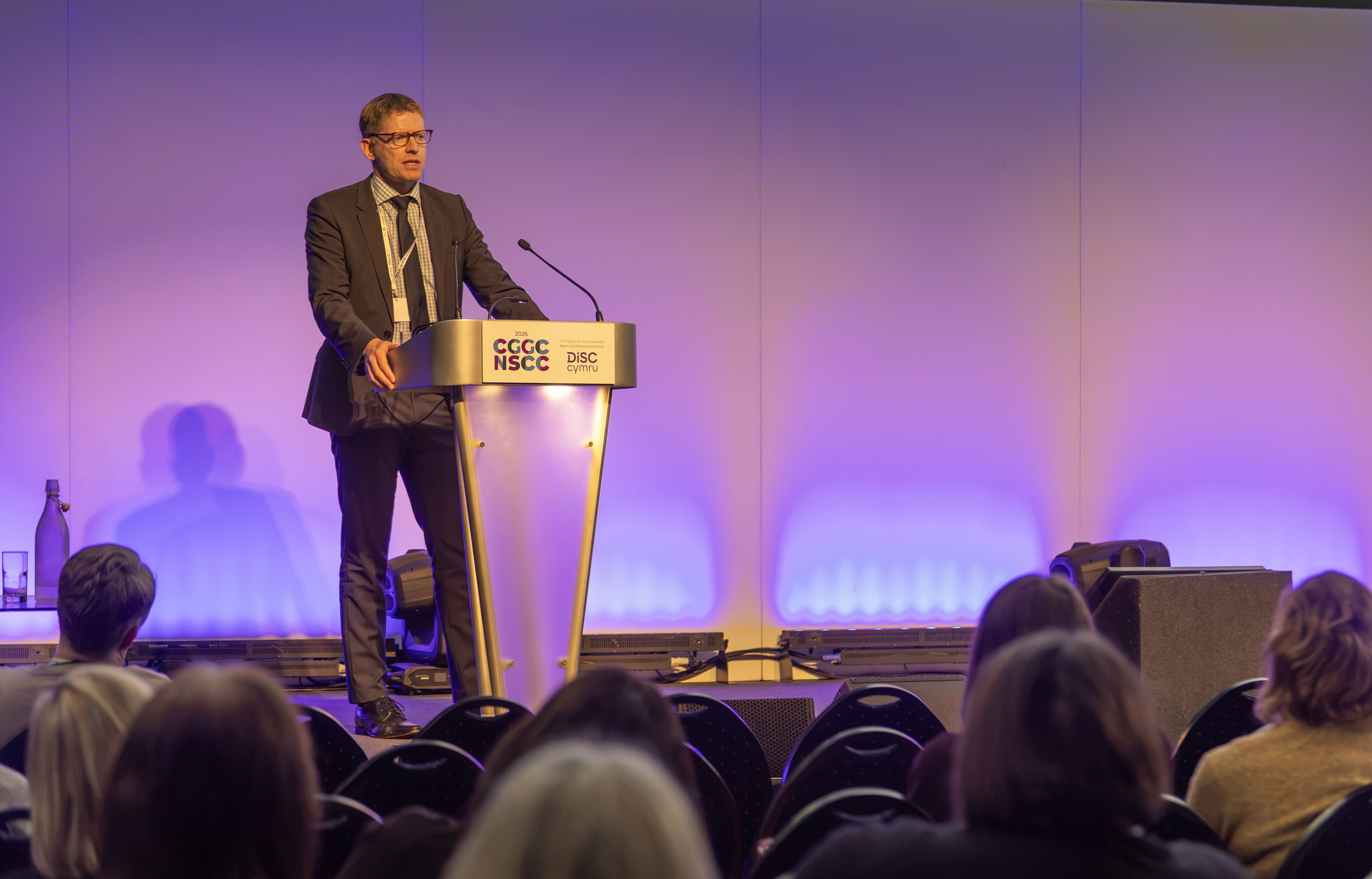
For the second consecutive year, DiSC Cymru was the Main Conference Partner, reflecting the growing importance of harnessing digital, data and technology to support social care in Wales. But the partnership went much further than headline support. DiSC Cymru was integrated throughout the conference, contributing to its opening, panels, workshops, fringe activity, discussions and conversations across the two days.
Lindsey Phillips, Chief Digital Officer for Local Government at the WLGA and SRO for DiSC Cymru, updated delegates on the Partnership’s progress one year on. She described strong foundations now being established around a recognised identity, a shared vision and priorities, active programmes, growing engagement and an increasing focus on delivery and learning. Her central message was that, while technology can enable extraordinary things, people and purpose come first, and partnership gives social care a stronger collective voice.
That collaborative ethos increasingly defines DiSC Cymru. Digital is not being treated as a separate technical agenda, but as part of the way social care thinks about leadership, workforce development, service improvement and collaboration. The aim is to use technology, data and digital capability to improve outcomes for people.
One of the defining features of NSCC26 is the prominence of people sharing their own experiences. Three Expert by Experience contributions brought very different stories to the conference, but all reminded us of the extraordinary impact that people, relationships and the way we respond to one another can have.
Claire Dyer shared her experience of being misunderstood within health and social care before eventually receiving support that enabled her to build a life around her own choices, goals and ambitions. Her story challenged us to listen differently and to question what we mean when we label someone or their needs as ‘complex’.
Bethany Colley spoke about the difference a single positive adult presence can make in a child’s life. Her story was a powerful reminder to foster carers, social workers and communities that active mentorship, belief and unconditional support can alter the course of a young person’s future.
Darren Mutter, Director of Social Services and Housing at Carmarthenshire County Council, spoke with remarkable openness about a deep personal loss he experienced, what this taught him about mental health, resilience and the need to challenge stigma in our workplaces and communities. His contribution reinforced an important leadership message: creating a culture where people feel able to be honest about their own vulnerability is a strength, not a weakness.
Together, these voices helped keep lived experience at the heart of conversations about systems, policy and leadership.
Day two opened with a timely contribution from Delyth Jewell, Deputy Minister for Social Care, Mental Health and Women’s Health, setting the conference conversation within the priorities of the new Welsh Government. Those priorities include:
- progressing a National Care Service for Wales
- strengthening safeguarding arrangements
- moving mental health services towards open-access, same-day support
- strengthening community support for neurodivergent people and people with learning disabilities
- developing a new Dementia Strategy
- continuing action through the Women’s Health Plan.
Her contribution was particularly timely for social care leaders thinking about how the sector positions itself within a new Programme for Government and ensures social care remains visible at the heart of national priorities.
Professor Tracy Daszkiewicz, Executive Director of Public Health and Strategic Partnerships at Aneurin Bevan University Health Board and President of the Faculty of Public Health, then challenged delegates to consider ‘The Importance of What we Don’t Know’. Her keynote explored the limitations of relying only on the things that can easily be captured in evidence and data.
Tracy’s contribution challenged us to consider whose experiences could be absent from the evidence, and what those gaps mean when we design preventative services and make decisions about people’s lives.
The workshops created opportunities to move many of these big themes into practical conversations about change.
‘From Commitment to Culture: Voices Driving Change in Social Care’ brought ADSS Cymru’s Anti-Racist Wales Action Plan work into the conference programme. Cultural Ambassadors Farah Khan of Newport City Council and Tracy Welch of Merthyr Tydfil County Borough Council shared how they are helping their organisations turn commitments to anti-racism into meaningful cultural change.
It was a full room with an engaged, interested and supportive atmosphere, reinforcing the appetite across social care to learn from lived experience and translate commitments into sustained action.
There was also a strong Welsh-language dimension to the workshops. Discover Hidden Welsh Skills in Social Care / Darganfod Sgiliau Cymraeg Cudd mewn Gofal Cymdeithasol brought together contributors from Social Care Wales and care homes to explore the Welsh-language skills that already exist across the workforce and how they can be recognised and used more effectively.
Across both days, workshops brought together practice, research and lived experience and gave delegates opportunities to explore the issues affecting adults’ and children’s services in much greater depth.
The parallel children’s and adults’ sessions on day two were another highlight, putting detailed practice firmly alongside the conference’s bigger strategic conversations. The programme included work on co-production, homelessness support, suicide prevention and innovative approaches within children’s services.
What made the sessions particularly valuable was their grounding in the realities of delivering support: what is changing, what is working and what practitioners and leaders elsewhere in Wales can learn from it.
Those practical examples reinforced something heard repeatedly across the two days: improvement is possible, and some of the answers already exist within communities, services and the workforce. The challenge is to connect them, learn from them and create the conditions for them to spread.
Highlights of these sessions included Alun Lock of Pentan Architects and Naomi Lovesay of Monmouthshire County Council, who spoke about the award-winning project Severn View Park, a dementia care home designed to feel familiar and empowering rather than institutional. Home hearths, gardens to be tended, communal cooking, and a purpose-designed ‘village hall’, bringing residents and people from the community together, offered a vision for older people’s care brought into sparkling reality.
PAN Cymru brought co-production to life in a simple, engaging and genuinely inclusive way, by exploring how listening differently can transform relationships. It included an introduction to Clean Language, an interactive exercise and parents’ stories, with PAN Cymru showing the ways in which it acts as a bridge between communities and social care.
One of the strongest ideas emerging from the conference was that social care works in the space between crisis and ordinary life. It makes normality possible again.
That idea was brought into particularly sharp focus by inspirational speaker Thelma Stober, Co-Chair of the Grenfell Tower Memorial Commission, a Deputy Lieutenant of Greater London, public sector solicitor and mediator, and survivor of the 7/7 bombings. The conference programme placed her contribution at the heart of the final afternoon.
Drawing on her personal and professional experience, Thelma reflected on survival, recovery and what happens after the immediate emergency has ended. Her message asked us to recognise the power and humanity of the individual when responding to the aftermath of disaster and trauma.
She challenged delegates to think beyond systems and timescales. Recovery does not necessarily follow an organisational funding cycle. Independence does not mean needing less support. And survival should never be mistaken for somebody no longer needing other people around them.
Her contribution brought us back to one of the simplest but most important questions of the conference: what matters to you?
The commitment to and celebration of connection did not end with the daytime programme. Connect: Under the Dome 2 brought delegates together at CultVR Lab for an evening that was deliberately different: less formal and more creative, designed to make room for joy, relationships and conversations. The event combined performance, food, music, dancing and conversation, with inclusive theatre company Hijinx returning as part of the programme.
Hope4Change, a local band founded as a therapeutic place to find connection through music and friendship, brought the evening to life, while Hijinx’s contribution was a reminder of the importance of creativity, inclusion and expression within the wider social care story.
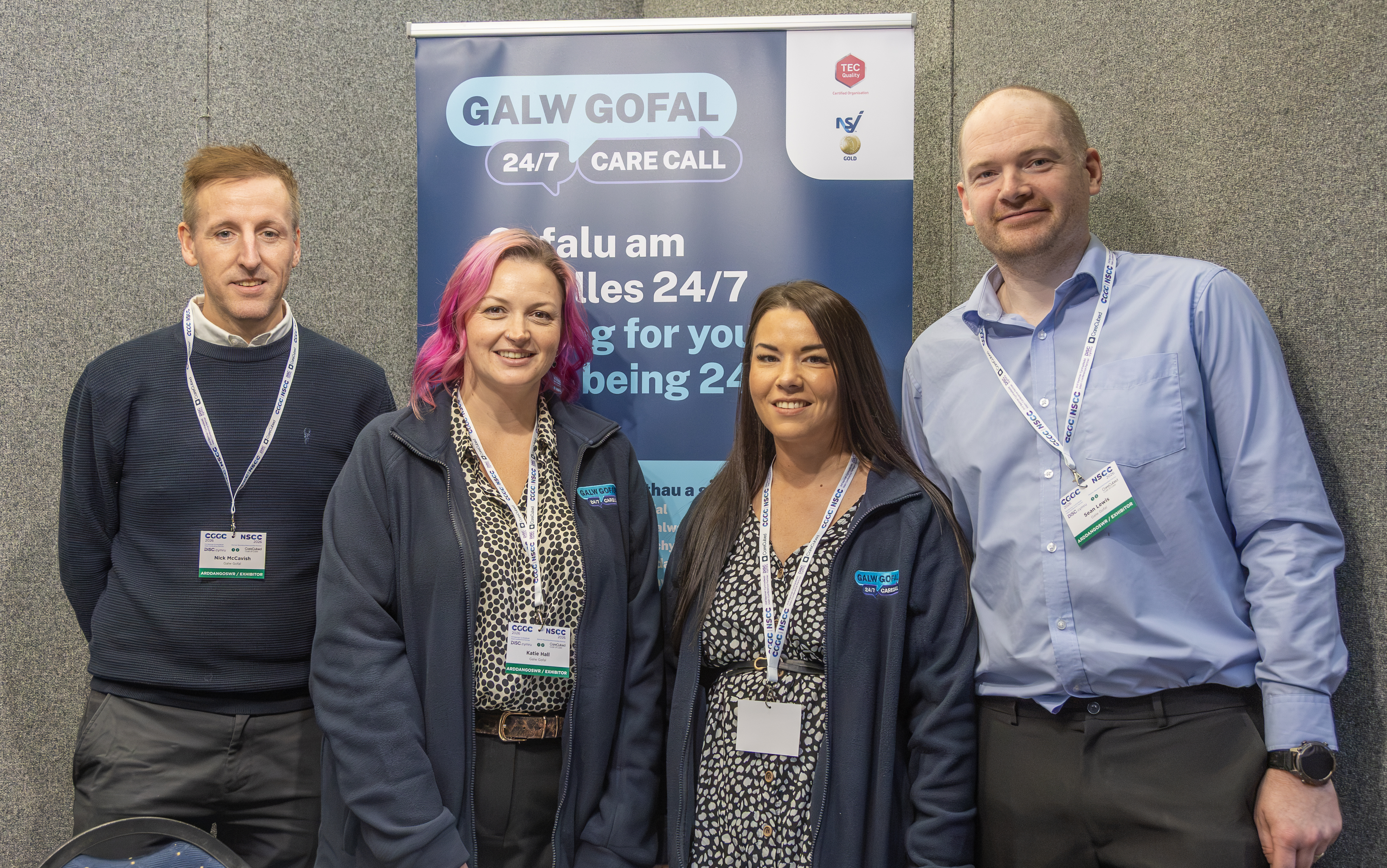
For all the learning within the formal programme, some of the most valuable moments happened simply because people were together. The conversation between sessions in the exhibition space; meeting somebody facing the same challenge elsewhere in Wales; hearing a personal experience that changes how you think about your own work; finding a new project partner; offering encouragement to a colleague.
That sense of connection sat at the heart of the National Social Care Conference.
Our enormous thanks go to every delegate, speaker, Expert by Experience, workshop leader, exhibitor, performer and partner who contributed to NSCC26, to DiSC Cymru for returning as our Main Conference Partner, and to CareCubed for their support as Merchandise Partner.
The challenge now is what we do with this energy. If there was one invitation to take back into our organisations, perhaps it is this: choose one change that will make a real difference, make it measurable, and then ask people with lived experience whether they can actually feel that difference.